
Motherhood and Racial Inheritance
Passing (Nella Larsen Edition)This flow explores how the women’s fears about children turn racial classification into an intimate question of family and future.
increasing Bearing strength in each event
 decreasing
Bearing strength in each eventdecreasingThe Question of a Child
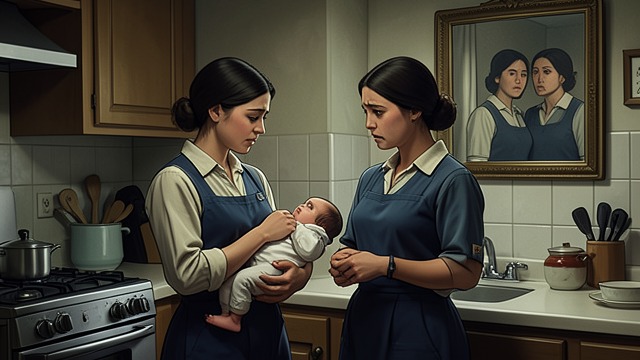
The Question of a Child
Anxiety about appearance
Clare says she feared that Margery might be dark, and Gertrude describes a similar fear about her sons. Their conversation reveals the pressure to produce children who will be accepted as white.
Reproduction under racial rules
The women’s fear is shaped by beliefs about inherited ancestry and the possibility that it will become visible. Family life becomes subject to the same racial classification as public identity.
Irene Names Her Son
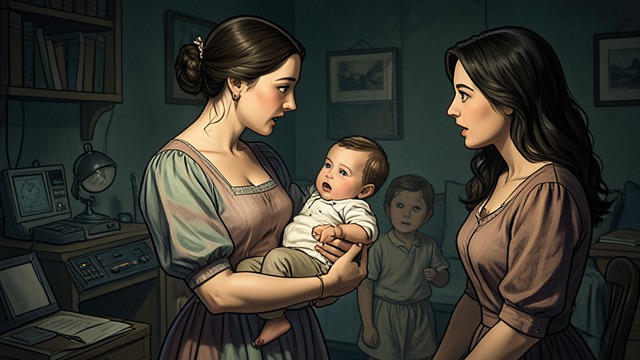
Irene Names Her Son
A refusal of shared prejudice
Irene says that one of her boys is dark. Her statement exposes the assumption that a dark child must be an unwanted misfortune.
Motherhood without denial
The exchange distinguishes Irene from the other women without making her free of racial pressures. Her family is still shaped by the same society that fears Black ancestry.
Margery as a Constraint
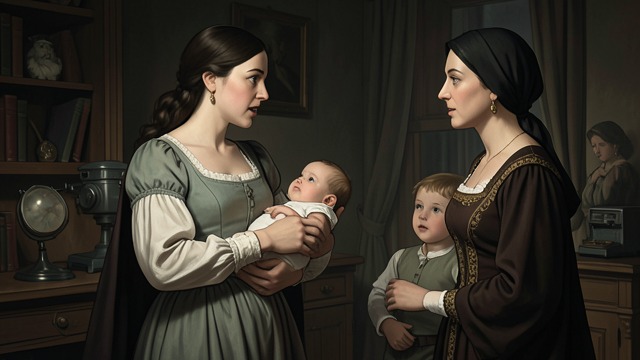
Margery as a Constraint
A daughter in the calculation
Irene urges Clare to think about what discovery would mean for Margery. Clare acknowledges that her daughter is what keeps her from choosing Harlem openly.
Responsibility and desire collide
Clare experiences motherhood as a severe limitation, while Irene treats it as an obligation to protect children. Their disagreement reveals distinct meanings of care and freedom.
The Lynching Lesson
The Lynching Lesson
Racial danger reaches the table
Theodore asks about lynching, and Brian answers directly. Irene objects because she wants the boys’ childhood to remain happy and protected.
Preparation becomes parental duty
Brian argues that the boys must learn what they face. Their conflict shows that children cannot be insulated from racial violence by silence alone.
Children Beyond the Ending
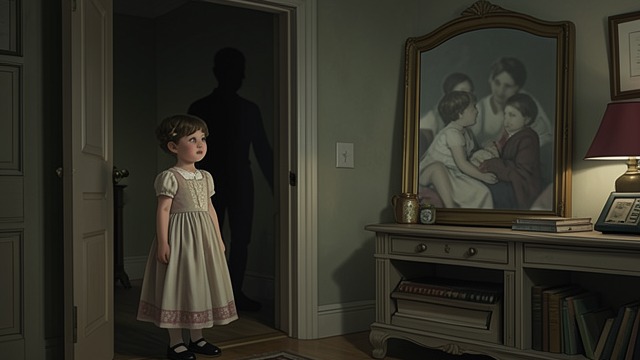
Children Beyond the Ending
Futures not narrated
The book does not show Margery’s response to her mother’s death or the Redfield boys’ understanding of the catastrophe. The children remain outside the final explanation.
Inheritance as uncertainty
The unresolved futures echo the novel’s concern with what families pass on: ancestry, fear, silence, and social position. No child is protected from history simply by adult intention.
At tea with Clare and Gertrude in Chicago
Moments after Gertrude describes her fears
During Clare’s request to enter Harlem
Dinner before the final party
After Clare’s fall, beyond the last narrated scene
